Image Data Does Not Exist. Please Re-upload the Image. Godaddy
As with any platform, in that location are e'er those abrasive errors or problems you have to learn how to work through. Trust us, we've pretty much seen them all! From the white screen of decease to database connexion errors, WordPress definitely has its quirks. 😉 Merely we withal love it! Today we're going to dive into one of the more than common ones, theHTTP mistake. Users typically come across this when trying to upload images or videos to the WordPress media library.
While the HTTP error is commonly piece of cake to prepare it can be rather frustrating as it usually interrupts your workflow. Zip is worse than spending xx minutes trying to notice that perfect prototype for your blog post, you go to upload information technology, and bam, y'all're suddenly met with a very vague error.
Below we'll explore why this error happens and what yous can practise to quickly resolve it and so you tin get dorsum to uploading your media.
What is the WordPress HTTP Fault?
The WordPress HTTP error occurs when something goes wrong while attempting to upload images or videos using the built-in media library tool. Unfortunately, dissimilar browser errors where nosotros tin unremarkably reference an HTTP status code, WordPress errors are sometimes a niggling harder to troubleshoot (specially if you don't know how to enable WordPress debugging way).
The very vague "HTTP error" definitely doesn't aid y'all determine what might exist wrong or fifty-fifty where to start looking. But that is because there could be a few causes for the failure and WordPress just doesn't know why, so it spits out a generic error message (equally seen below).

How to Set up the WordPress HTTP Fault
From our experience, the WordPress HTTP error typically originates from two things: the commencement is aclient-side or user error (your login session, bad characters in the file name, etc.), and the second is atrouble or setting on your WordPress host(server event, retentiveness list, third-party plugin, shared hosting throttling resource, etc.). So we'll dive into a little of both.
Hither are some recommendations and things to check to gear up the error (sorted in order by most common reasons we see):
- Refresh the Folio
- Compress or Resize the File
- Rename the Paradigm File
- Temporarily Deactivate Plugins and Theme
- Enquire Your WordPress Host
- Increase PHP Retention Limit
- Check Uploads Folder Permissions
- Move to the Latest Version of PHP
- Ready Functioning Issues with Imagick and Shared Hosts
- Remove Custom Media Library Path
- Disable mod_security
- Install the Add To Server Plugin
one. Refresh the Page
The very first thing you should do when encountering the WordPress HTTP error is to simply refresh the folio in your browser. Sounds too piece of cake right? 😉 Well, actually this is the well-nigh mutual fix we've seen for it. Here's why:
Starting time, for whatever reason, your browser might have lost connectedness temporarily with WordPress and the process but failed to complete. This could be due to your Internet service provider, a temporary hiccup with your WordPress host, etc. If yous refresh the page and try uploading over again it the error sometimes will resolve itself.
Second, we've also seen that sometimes later on refreshing the folio, or coming dorsum to the WordPress editor from some other tab, that it suddenly kicks you out. This is about probable an indicator that your WordPress login session has expired. You should see the following bulletin:
Your session has expired. Please log in to proceed where you left off.

So naturally, you log dorsum in and try to upload your media once again. Withal, the HTTP error occurs. This is kind of a quirk with WordPress. Once yous log back in, yous need to actually manually refresh the page you're on. Then uploading media will work again.
2. Shrink or Resize the File
Yous might demand to edit your image file, which could entail reducing the file size (KB or MB) or decreasing the width/height (pixels). Nosotros recommend checking out our in-depth post on how to optimize images for the web. There are a lot of third-party image optimization plugins you can use to automatically do this for you (both reducing and resizing) when your image is uploaded to the media library.
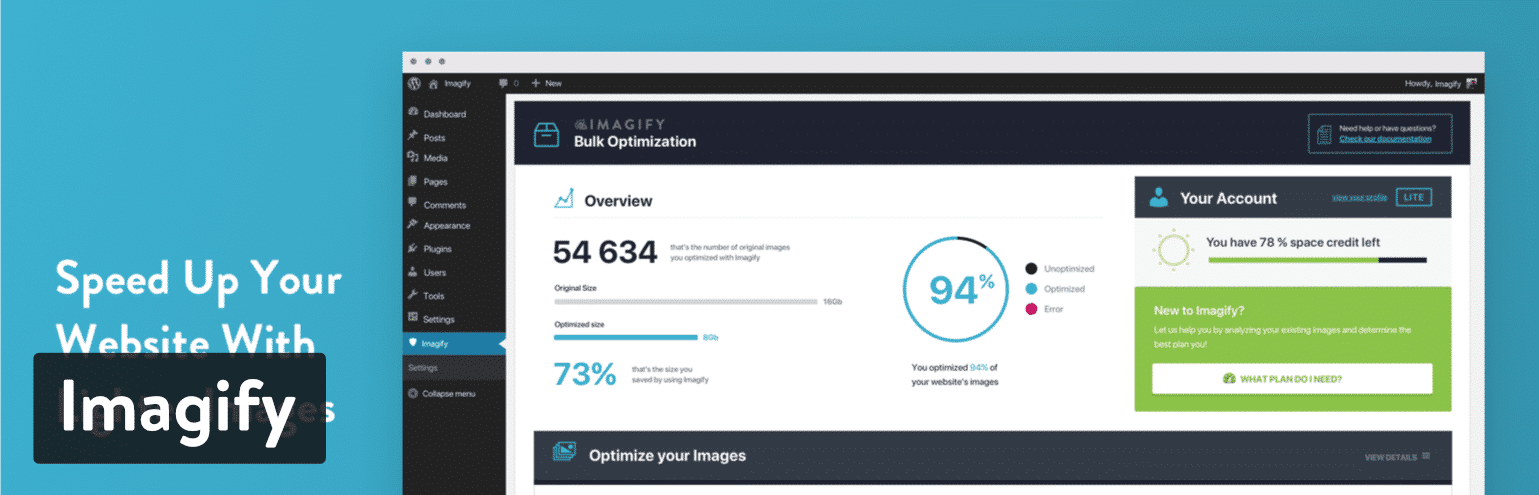
We have used Imagify on our Kinsta site for years without a single outcome. Merely in that location are a lot of other smashing ones out there likewise. Merely make certain whichever plugin you apply, that they are optimizing images on their ain servers, not locally. If you lot're bulk optimizing images locally this can drastically harm your site's performance.
It's OK to upload high-resolution images as WordPress supports responsive images out of the box. In fact, you will probably desire to so that the paradigm looks well-baked on retina displays. But unless your a photographer or business that needs loftier-resolution images a good dominion of pollex though is to keep your last image size under 100 KB and no more than than double the size of your website's content div width.
Also, you might have to play with the PNG and JPG file types. Sometimes one can be much larger than the other depending on what type of image it is.
Depending on the configuration of your WordPress host, you might too want to look into increasing the WordPress maximum upload file size.
3. Rename the Image File
It can never injure to attempt and rename the image file. WordPress should automatically append a number on the end if yous try to upload a indistinguishable file proper name, but in example that doesn't piece of work, endeavor renaming your file. Unfortunately, WordPress doesn't let you rename the file of an already uploaded image file, so you lot will demand to rename information technology locally and re-upload information technology.
When nosotros are uploading images that already exist we typically add a -i or -2 on the end (example: paradigm-file-ane.png, image-file-2.png). Brand certain to add the nuance otherwise Google will read it every bit one word and it could injure your SEO.
Also, to be safe, stay clear of uploading an image with file names that contain special characters. This includes international language symbols and characters such every bit apostrophes. Dashes are OK. You can see in this example below on the Kinsta Japanese site, we are using English for the file names, not the special characters. While WordPress tin technically support these, there are a lot of other issues that tin pop upwardly.

4. Temporarily Deactivate Plugins and Themes
It'southward always a good idea if yous're having HTTP errors to try deactivating your plugins and even switch your WordPress theme to the default to see if this resolves the problem. A few plugins that are are typical culprits include epitome optimization plugins (they necktie direct into the media library) and security plugins such as WordFence (these plugins are sometimes too restrictive). Or y'all tin simply delete your WordPress theme.
If you don't want to affect your live site, simply clone your live site to a staging environment. If the WordPress HTTP error is also happening on staging, then you lot tin quickly deactivate all your plugins to offset narrowing it down.
Call up, you won't lose any data if you lot simply conciliate a plugin. If you can still access your admin, a quick way to practice this is to scan to "Plugins" and select "Deactivate" from the bulk actions menu. This volition disable all of your plugins.

If this fixes the outcome you'll demand to find the culprit. Start activating them one by one, and effort uploading an image again in the media library. When you meet the HTTP mistake render, you've found the misbehaving plugin. You tin can then reach out to the plugin developer for help or postal service a support ticket in the WordPress repository.
If you tin't access WordPress admin you can FTP into your server and rename your plugins binder to something like plugins_old. Then check your site over again. If information technology works, then you volition need to test each plugin one by ane. Rename your plugin binder dorsum to plugins and so rename each plugin folder within of if information technology, one by ane, until you discover information technology. You could as well try to replicate this on a staging site start.

The same goes for your WordPress theme. Typically themes don't tie into the media library, but nosotros've seen some weird setups. It never hurts to try switching your theme over to the default 20 Seventeen theme to encounter if it fixes it. Just similar with plugins, you don't have to worry nigh losing your current theme settings. All of that is stored in the WordPress database.
5. Ask Your WordPress Host
If you've tried the steps to a higher place already and are still getting the WordPress HTTP error, we recommend reaching out to your WordPress host for assistance earlier proceeding. Many of the additional troubleshooting steps are a little more advanced and a lot of times y'all can inquire your host to practice or cheque on this for you.
Kinsta's support team is bachelor 24×seven from the bottom correct-manus side of the MyKinsta dashboard.

6. Increase PHP Memory Limit
Some other cause for the WordPress HTTP fault is that your server lacks the available memory for the background upload process to complete successfully. This is a very common trouble with shared WordPress hosting. To set up it y'all need to increment the amount of memory PHP tin can apply.256 MB is recommended.
The default memory limit for Kinsta clients is already set to 256 MB. If you host your WordPress site at Kinsta you lot shouldn't have any bug with a lack of memory. 👍
Increase PHP Memory Limit with wp-config.php
You tin can increase the PHP memory limit by calculation the following code to your wp-config.php file. Note: this may be overwritten past a server-level rule in place by your WordPress host.
define( 'WP_MEMORY_LIMIT', '256M' ); Increment PHP Memory Limit in cPanel
If your host is using cPanel, you tin increase the PHP memory limit in 2 dissimilar areas.
The outset is under the software section. Click on "Select PHP Version." Click on "Switch to PHP Options." You can then click on "memory_limit" to change its value.
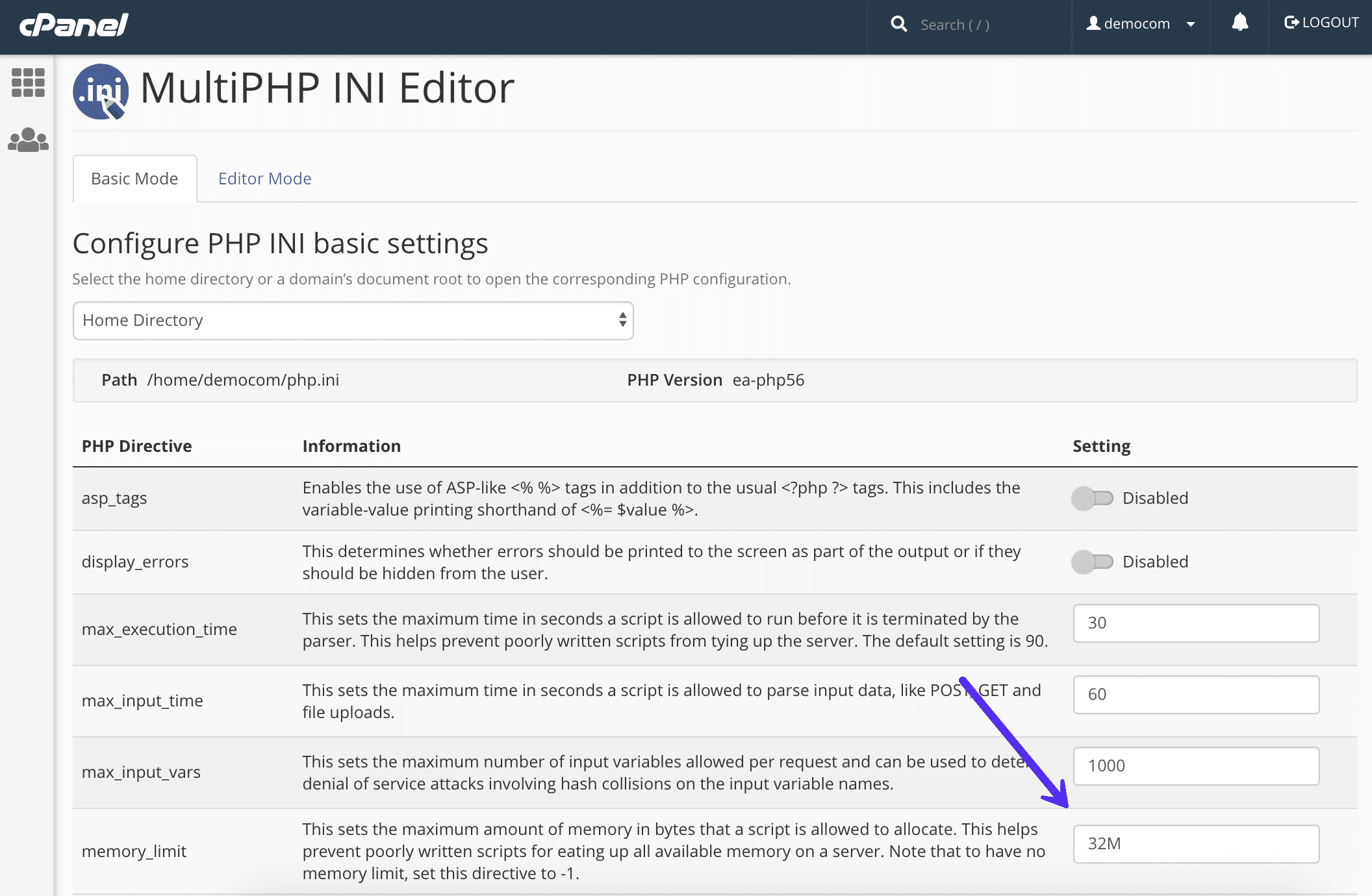
The second area is also under the software section. Click on the "MultiPHP INI Editor" tool. This allows you lot to modify the php.ini file. Simply curl down to where it says "memory_limit" and input a higher value.
Increase PHP Memory Limit with php.ini
Subscribe Now
If you aren't using cPanel, you tin likewise edit the php.ini file directly if yous have access. To do this, login to your site via FTP or SSH, go to your site'due south root directory and open or create a php.ini file.
Can't connect via SSH? Learn how to fix the SSH "Connectedness Refused" mistake.
If the file was already in that location, search for the "memory_limit" setting and change it as necessary.
Some shared hosts might likewise require that you add together the suPHP directive in your .htaccess file for the higher up php.ini file settings to work. To do this, edit your .htaccess file, also located at the root of your site, and add together the post-obit lawmaking towards the top of the file:
<IfModule mod_suphp.c> suPHP_ConfigPath /home/yourusername/public_html </IfModule> Increase PHP Memory Limit with .htaccess
The .htaccess file is a special subconscious file that contains various settings you can employ to modify the server behavior, right down to a directory specific level. If yous don't take access to php.ini, we advise you try this next. Kickoff, login to your site via FTP or SSH, take a wait at your root directory and see if there is a .htaccess file in that location.
If there is you tin edit that file to and modify the "php_value memory_limit" value.
7. Cheque Uploads Folder Permissions
Typically when there is a folder permissions error you should get a message in WordPress nearly it not being able to write to the directory. However, this might not always exist the example. If a WordPress site has been hacked or infected with malware, in that location could be a lot of issues going on with the permissions.
Tip: Kinsta offers gratis hack fixes for all clients. 😄
The main folder you're concerned with is your /wp-content/uploads folder, as this is where files are stored when uploaded via the media library.
Co-ordinate to the WordPress Codex, all directories should be 755 (drwxr-xr-10) or 750.
You can easily come across your folder permissions with an FTP client (every bit seen beneath). You could also attain out to your WordPress host support team and ask them to chop-chop GREP file permissions on your folders and files to ensure they're set up properly.
Make certain that if yous manually update the permissions on this folder that you bank check both the "Recurse into subdirectories" option likewise as the "Apply to directories merely."

8. Move to the Latest Version of PHP
WordPress officially recommends PHP seven.iii or higher. If yous're non running on that, you lot're beneath the minimum requirements set by the developers of the CMS. 😮
We ever recommend running the latest and supported versions of PHP due to the fact it offers improve security and performance, including bug fixes and functions that need to be deprecated.
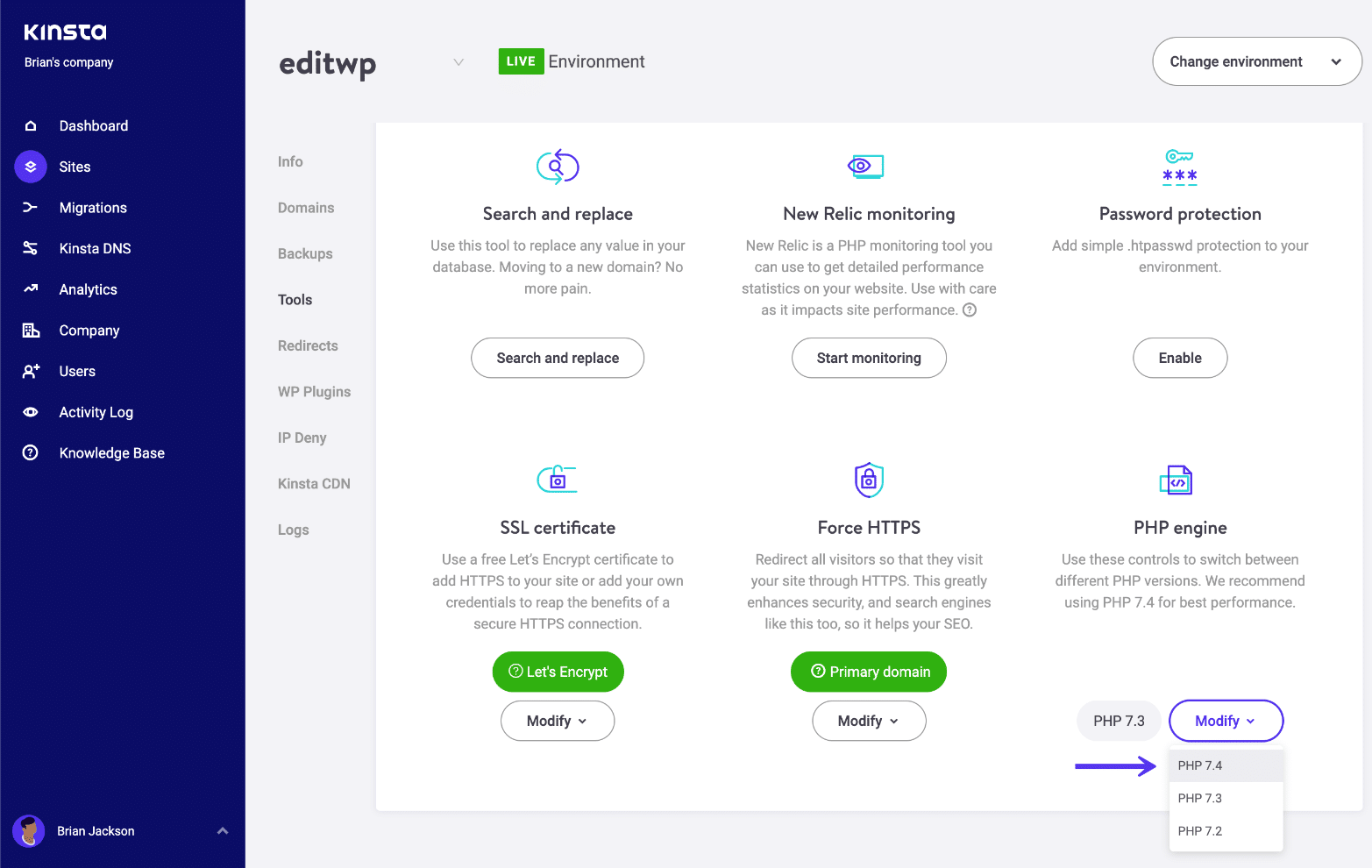
Nosotros have seen older versions of PHP contribute to all sorts of errors, including the infamous WordPress HTTP error. At Kinsta you can hands change to PHP 7.four with a single click in the MyKinsta dashboard.
If your host uses cPanel they might already accept an pick bachelor to you to change your version of PHP. Merely log in to cPanel and nether the "Software" category click on "Select PHP Version."

Yous can and then select the PHP versions available to you that your host supports.

9. Fix Functioning Issues with Imagick and Shared Hosts
There are ii different PHP modules WordPress uses for image processing: GD Library and Imagick (ImageMagick). Depending on what is installed on your server, WordPress may use either one.
The problem is that shared WordPress hosts have a lot of subconscious resource throttling behind the scenes. That is the only mode they can cram so many users on the same machine. A common event people run into is that in that location are likewise few resources allocated to Imagick (ImageMagick). Hosts will limit the ability to use multiple threads, hence resulting in the WordPress HTTP mistake.
You can add together the following code to the top of your .htaccess file, changing the thread limit value to something higher.
MAGICK_THREAD_LIMIT 1
Some other option you take is to tell WordPress to apply the GD library instead of Imagick. Y'all can practice this by simply adding the post-obit lawmaking to your theme'south functions.php file.
function wpb_image_editor_default_to_gd( $editors ) { $gd_editor = 'WP_Image_Editor_GD'; $editors = array_diff( $editors, array( $gd_editor ) ); array_unshift( $editors, $gd_editor ); return $editors; } add_filter( 'wp_image_editors', 'wpb_image_editor_default_to_gd' ); We'll exist blunt. If yous're having to tweak things like this it'southward time to movement to a new WordPress host. Kinsta doesn't have crazy limits like this in place and for the about part, you're but limited by PHP workers. You lot shouldn't have to worry about these types of things as a website owner.
We apply LXD managed hosts and orchestrated LXC software containers for each site. What this means is that every WordPress site is housed in its own isolated container, which has all of the software resources required to run it (Linux, Nginx, PHP, MySQL). The resource are 100% private and are not shared between anyone else or even your ain sites.
Read more about how Kinsta is different than whatever other host you've tried.
x. Remove Custom Media Library Path
It very well could exist that your media library path isn't setup correctly. We typically run across this when users migrate their local development site over to product. If you lot look in "Media" under "Settings" in your WordPress dashboard and see a file path value listed, go ahead and delete information technology and click "Save Changes." You desire your media to be stored in the default /wp-content/uploads folder.
Below is what it typically looks like. If you don't see a library path, and so yous're all skillful here.

11. Disable mod_security
Mod_security is an open source firewall that sometimes might cause the WordPress HTTP mistake to occur. You can disable mod_security by adding the following code to the top of your .htaccess file.
<IfModule mod_security.c> SecFilterEngine Off SecFilterScanPOST Off </IfModule>
If y'all're using cPanel, you tin can also disable it by clicking into "ModSecurity" in the "Security" department.

Then toggle the status from "On" to "Off" next to the domain y'all want to disable it on.

We always recommend using an enterprise-grade and yet affordable WAF like Sucuri or Cloudflare instead. You tin can read our recommendation for the best WAF settings here.
12. Install the Add From Server Plugin
Concluding but not least, if you lot're really in a bind and goose egg else seems to be working, yous can install the free Add From Server plugin. Perhaps you're waiting for a response from your WordPress host or a programmer on how to get the WordPress HTTP error resolved.

The Add together to Server plugin will usually go you around the error and could be a practiced temporarily set up, especially if you're right in the centre of something important. It was originally adult to allow you lot to add very big files via SFTP.Of import: this plugin is no longer maintained or supported. Use at your ain risk.
Summary
Equally you lot can see there are quite a few different ways to prepare the WordPress HTTP error. Hopefully ane of the solutions above worked for you lot and you're already back on track and uploading your media. If you keep to receive this error fourth dimension and fourth dimension again, it might be fourth dimension to consider upgrading to a better WordPress host. Many of the solutions above are things yous don't have to worry about at Kinsta.
If you found a solution that isn't in our listing, delight leave a comment a beneath and we'll go information technology added.
Save time, costs and maximize site operation with:
- Instant aid from WordPress hosting experts, 24/7.
- Cloudflare Enterprise integration.
- Global audience accomplish with 29 information centers worldwide.
- Optimization with our built-in Application Operation Monitoring.
All of that and much more, in one programme with no long-term contracts, assisted migrations, and a 30-day-money-back-guarantee. Bank check out our plans or talk to sales to find the plan that'southward right for you.
Source: https://kinsta.com/blog/wordpress-http-error/
0 Response to "Image Data Does Not Exist. Please Re-upload the Image. Godaddy"
Post a Comment